
The true cost of an air source heat pump
As the UK intensifies its drive toward net-zero and renewable heating solutions, more homeowners are considering making the leap from a traditional gas boiler over to an air source heat pump (ASHP). But the headline numbers often don’t tell the full story.
At Prestantia Eco, we believe in equipping you with the full financial picture, so you can make a considered, confident decision about whether an ASHP is right for your home.
Why environmental impact should be a key part of your decision
For many homeowners, the move toward renewable heating isn’t just about cutting bills — it’s about cutting carbon. Heating accounts for around 30% of the UK’s total household emissions, and traditional gas or oil boilers are among the biggest contributors. Air source heat pumps offer a clear pathway to dramatically reducing your home’s environmental footprint.
Because ASHPs transfer heat instead of burning fuel, they can reduce your carbon emissions by up to 65% compared with a gas boiler — and even more when powered by renewable electricity. For eco-conscious households looking for long-term sustainability, resilience, and future-proofing, the environmental advantages are not just an added bonus. They are a crucial part of evaluating the true value of a heat pump over its lifetime.
With that environmental context in mind, let’s explore the financial and practical considerations of owning an ASHP.
Upfront costs of air source heat pumps
When you start looking at ASHPs, the biggest hurdle for most homeowners is the initial investment.
Equipment & installation
Typical UK market guidance suggests that for a retrofit ASHP installation – replacing a gas boiler in an existing property – you can expect costs in the region of £8,000 to £15,000 (sometimes more).
This depends on property size, the complexity of the installation, and whether other upgrades are required.
For example:
- Equipment and materials might run from around £4,000 to £8,000 for a modest system.
- Labour, pipework, system integration/commissioning might add a further £4,000 to £7,000 (or more for larger homes).
- If your home has older radiators, insufficient insulation, or requires major work (e.g., underfloor heating, bigger radiators, electrical upgrades) then costs can increase further.
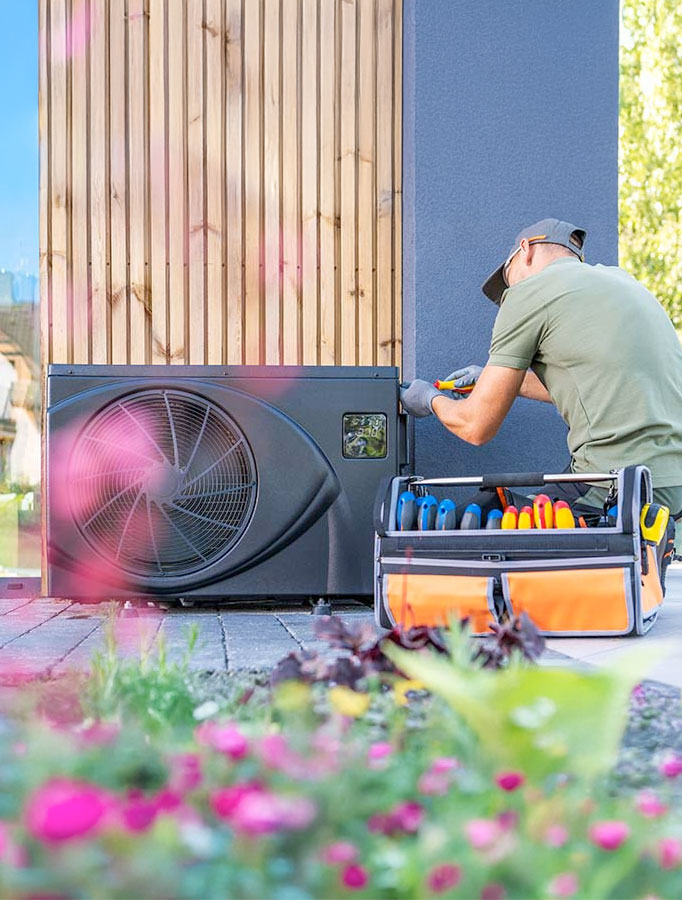
A trusted installer will provide a survey that outlines any pre-works required (insulation, cylinder upgrades, radiator size, space for outdoor unit) to make the system efficient.
Government grants & incentives
The upfront barrier is eased by grant support. The UK government’s Boiler Upgrade Scheme (BUS) offers up to £7,500 off the cost for eligible households in England & Wales.
So, after the grant, the effective upfront price can drop to around £1,000 – £8,000 (depending on your starting point) for many homes. Plus. there’s currently 0% VAT on heat pump installations (assuming eligible work) which further reduces the cost.
As many installers note: with the grant applied, an ASHP in some homes becomes comparable in cost to a high-end boiler replacement, making the conversation more about “which replacement heating system should I choose” rather than “should I have an ASHP”.
Key upfront cost variables
- Size of property (3-bed vs large detached)
- Existing heating system: Is it already set up for an ASHP (radiators size, cylinder, insulation)?
- Insulation levels & fabric of the building
- Outdoor space/positioning (for the unit)
- Electrical panel/work required (modern heat pumps draw more electrical load)
- Installer premium/brand of heat pump
The bottom line for homeowners is yes, the initial cost is significant – but the grant support and long-term lifecycle of these systems are important pieces of the decision-making process.
Running costs and energy savings
A common misconception is that because ASHPs run on electricity (which is more expensive per kWh than natural gas) they’ll cost more, but there are the following factors to consider.
Efficiency & electricity use
Modern ASHPs can deliver roughly 3 to 4 units of heat for every 1 unit of electricity used (known as a coefficient of performance, or COP, of 3-4).
For a typical three-bed UK home, estimates suggest running costs in a range of £800-£2,500 per year depending on the size of your home and current levels of insulation.
Comparative running cost: ASHP vs boiler
This is where running costs need more context:
- If you’re replacing a very efficient modern gas boiler (88-94% efficient), then the savings may be initially modest.
- If you’re replacing an inefficient system – like an old gas boiler, oil, electric/storage heaters – the uplift that comes from a more efficient system can be substantial, and running costs drop meaningfully.
- Also, bear in mind future developments: as grid electricity becomes greener and tariffs evolve, running costs will likewise change.
Electricity prices & the spark gap
This brings us neatly into the next section: the difference between electricity and gas prices – commonly known as the “spark gap”.

The spark gap effect on heat pump adoption
The term spark gap refers to the ratio between electricity-price and gas-price. In countries where electricity is inexpensive relative to gas, heat pump adoption has historically been much stronger.
In the UK, because electricity tends to cost more per kWh than gas, the short-term “running cost” perception for ASHPs can be a barrier.
Why this matters
- If the electricity price remains high compared to gas, then, even with high efficiency, a heat pump may not deliver immediate savings.
- Conversely, if grid decarbonisation brings electricity costs down (or favourable tariffs for heat pumps are introduced), the spark gap narrows and the value proposition improves.
What to watch out for
- Choose a smart electricity tariff (e.g., one with lower night-rates or specific tariff for heat pump users)
- Install solar PV or battery storage if possible, to reduce net electricity cost for the pump
- Insulate and optimise your home fabric (so the pump doesn’t need to “work harder”)
- Monitor future policy/energy market shifts, because the “running cost” side of the equation could get more favourable in coming years.
In short: while ASHPs may not always offer a dramatic yearly cost-saving today compared to the most efficient gas systems, the trajectory of future electricity/gas pricing and energy policy suggest this calculation will improve over time.

Maintenance, lifespan & hidden costs
Beyond installation and running, there are other cost factors – some expected, some sometimes overlooked.
Annual servicing & maintenance
General guidance suggests typical annual servicing of an ASHP costs £150-£300. Repairs can vary widely – some sources quote minor issues from £150 upwards, while major part replacement (e.g., compressors) can run into the thousands.
Life expectancy
A well-installed, well-maintained ASHP can last 15-25 years (some estimate 20+ years) compared to a typical gas boiler lifespan of 10-15 years. This extended lifespan is a crucial financial factor: you’re spreading that upfront investment over a longer time period.
Hidden / additional upgrade costs
These are often the “make or break” costs when assessing suitability of a home for an ASHP:
- Additional insulation or draught proofing required to make the pump efficient
- Possible radiator upgrades or underfloor heating installation (ASHPs prefer lower flow-temperatures)
- Space for hot-water cylinder or adaptation of existing heating distribution
- Electrical upgrades (as heat pumps often need greater electrical load capacity)
- Potential landscaping or external-unit siting costs (if outdoor unit requires special mounting, noise mitigation, re-routing etc.)
Before installation, a detailed survey is essential to surface these costs. At Prestantia Eco we always recommend the survey as step one, so you avoid surprises and get a realistic full cost quote.
Return on investment (ROI): Long-term savings
So, with the upfront cost, running cost and maintenance factored in, what should you expect in terms of return? Is the investment worth it?
Energy bill savings
If you’re switching from a less efficient system (old boiler, electric or oil heating), you might see annual savings of £200-£500 (or more) depending on size, fuel previously used and efficiency improvements.
Typical payback period
Based on current typical UK figures:
- Upfront cost net of grant: perhaps £5,000-£10,000 (varies widely)
- Annual savings: perhaps £200-£500 (again, highly variable)
This suggests a payback period of approximately 7-15 years in many cases.
If you factor in solar PV, smart tariffs or better insulation, this period can shorten.
Property value & future proofing
Installing an ASHP isn’t just about energy bills: it’s about future-proofing your home. There’s a growing premium in the UK market for homes with higher EPC ratings and low-carbon heating systems.
Homes with good ratings can sell for up to 16% more in some markets (though that figure will vary widely by region and market conditions).
Beyond value, an ASHP can help insulate your home against future regulation – gas boilers may face restrictions over time.
Environmental savings
From a sustainability standpoint: ASHPs reduce carbon emissions significantly – typical savings might be 1.5 to 2.5 tonnes of CO₂ per year, depending on electricity grid intensity and system performance. That matters when you weigh value not just in pounds, but in planet-friendly credentials too.
In short: yes, the ROI logic works, but:
· hinges on your home being a good fit
· your usage being typical or better
· the system being well-installed and efficient.
Is an air Source heat pump worth the investment?
Bringing everything we’ve discussed together, this is the Prestantia Eco verdict.
- Upfront cost: Significant, but mitigated by grants (e.g., £7,500 BUS) and VAT exemptions.
- Running cost: Electricity is more expensive per unit than gas, but the high efficiency of ASHPs helps bridge that gap. For some homes, running costs may already be comparable; for others, savings may grow more slowly.
- Hidden costs: Proper survey and home-preparation are vital – insulation, system compatibility and electrical capacity can all can tilt cost-effectiveness.
- ROI and value: If your home is well-insulated and the system is properly designed, the payback period may fall into a 7–15-year window, and you get a long lifespan (15-25 years), future-proofing and environmental benefit.
So, is it worth it for you?
If you’re…
- A homeowner in England or Wales eligible for the grant
- Living in a property that’s reasonably insulated (or willing to upgrade insulation)
- Currently using a less efficient heating system (oil, old gas boiler, electric storage heaters)
- Planning to stay in the property long-term
…then installing an ASHP is a compelling option. It becomes more than just a replacement – it’s an investment into future comfort, value and sustainability.
If you’re instead:
- Living in a property with poor insulation and no immediate plan to upgrade
- Already using a very efficient modern gas boiler
- Planning to move home in the next few years
…then you may want to check the numbers more carefully and compare alternatives. In some cases, a gas boiler update plus insulation might make more sense in the short-term.

Our advice at Prestantia Eco
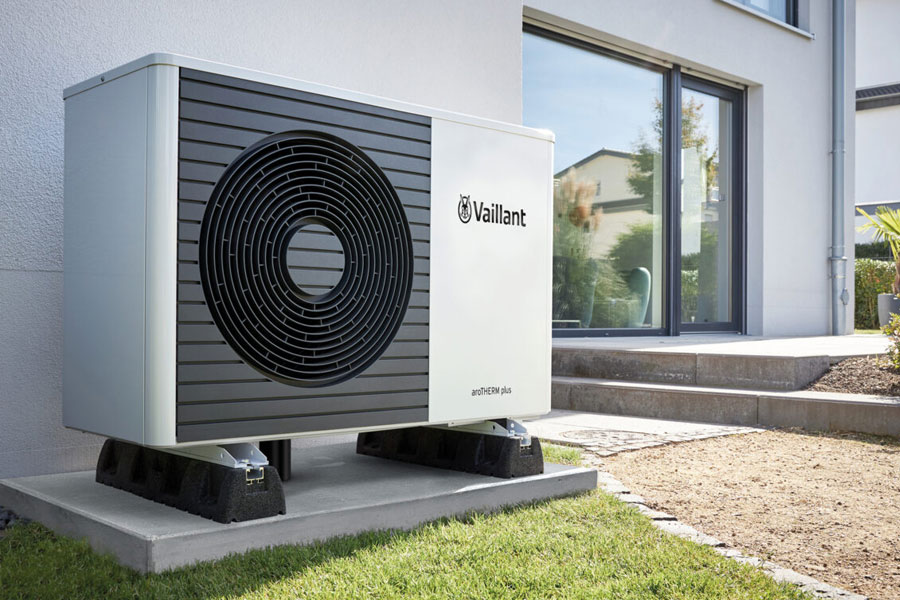
- Start with a survey: Let our team review your home’s fabric, heating system, insulation, radiators, cylinder and electrical capacity.
- Get the full cost-estimation including any pre-works (insulation, radiator upgrade, cylinder, electrical) beyond just the heat pump.
- Model the running cost using your actual usage, electricity tariff and options for solar/heat-pump tariff.
- Explore grant eligibility and ensure your installer is accredited (MCS etc) so you can claim the £7,500 BUS grant.
- Think long term: Not just the bills this year, but what saving you may make over 10-20 years, what value it adds to your home, and what resilience it gives you against future energy price rises.
There’s no one-size-fits-all answer. But with the right home and the right design, an air source heat pump offers strong long-term value, significant environmental benefit and a powerful step into lower-carbon home heating, making it a decision worth serious consideration for homeowners committed to the future.
If you’d like a tailored assessment, Prestantia Eco’s green-heating team are ready to guide you from initial survey to full install. Let’s make your transition to clean home heating a smart, confident investment.
We hope this blog post gives you more clarity on your options and helps you understand what you’re really paying for, what you’re really saving, and whether the investment makes sense for your home.
Making the Environment Part of Your Total Cost Calculation
When evaluating the true cost of an air source heat pump, it’s important to look beyond the installation price and running costs. For eco-conscious homeowners, the environmental benefits should carry real weight. An ASHP doesn’t just reduce your annual bills — it reduces your carbon footprint today and protects you from volatile fossil fuel prices tomorrow.
By combining financial savings, long-term stability, and a significant environmental impact, heat pumps offer one of the strongest all-round cases for future-proof home heating. When you factor in the grants available and the carbon avoided over its lifetime, the value of switching to renewable heating becomes clearer than ever.